The best cutting board material depends on individual priorities, with wood and rubber being ideal for knife care, plastic for raw meat sanitation, and bamboo for eco-friendliness. Wood offers natural antimicrobial properties and durability, while plastic is affordable and dishwasher safe. Glass and ceramic are hygienic but dull knives quickly, and specialty materials like stainless steel and silicone offer niche benefits. Selecting the right material ensures food safety, prolongs knife life, and improves kitchen efficiency.
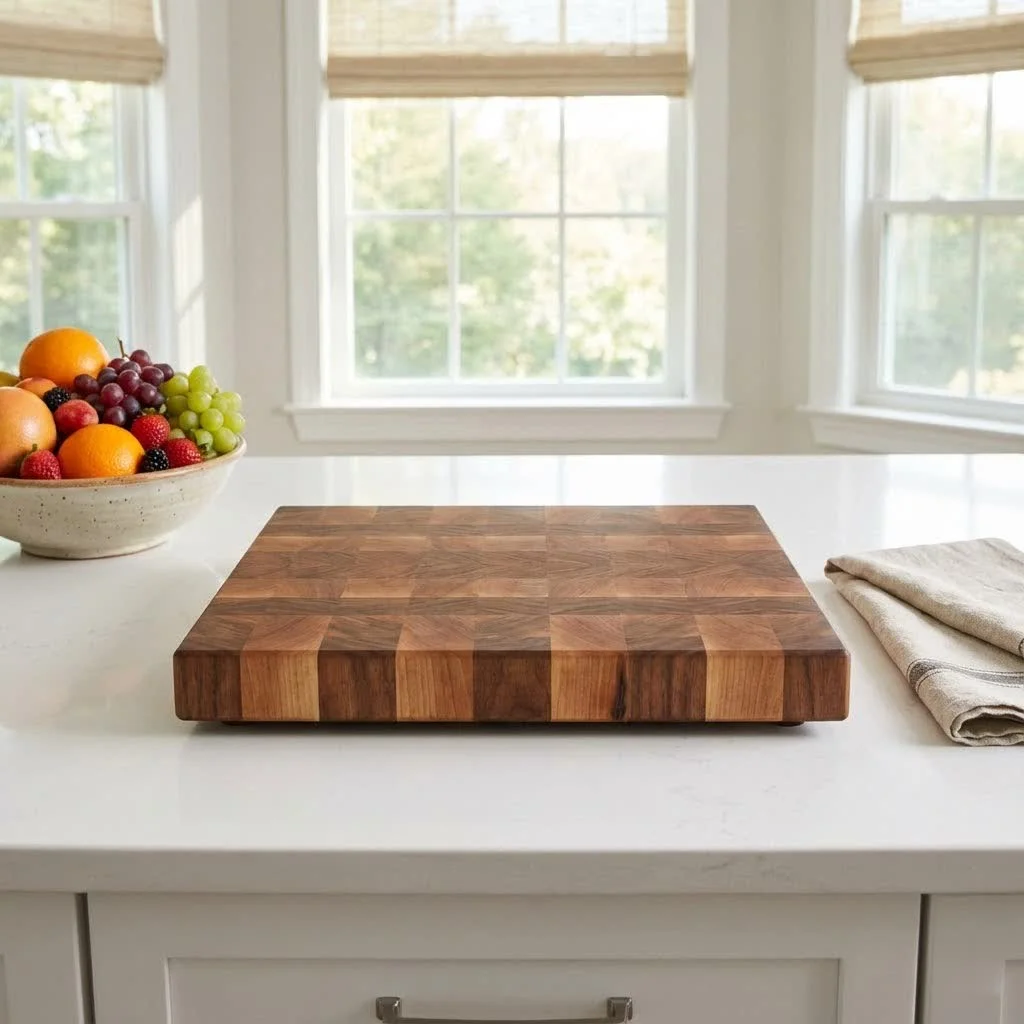
Wood Cutting Boards
Wood has been a traditional choice for generations, prized for its natural properties and aesthetic appeal.
Types: Hardwoods like maple, walnut, cherry, and teak are preferred for their tight grains, which resist deep knife marks and moisture absorption. Different constructions exist, such as end-grain (fibers run vertically, “self-healing,” gentle on knives) and edge-grain (fibers run horizontally, durable).
Pros:
- Knife-Friendly: Wood’s softer, more forgiving surface helps maintain knife sharpness longer than harder materials.
- Natural Antimicrobial Properties: Studies suggest that wood can absorb and kill bacteria within minutes, making it surprisingly hygienic.
- Durability: With proper care, a good quality wood board can last for decades.
- Aesthetic Appeal: Adds warmth and beauty to any kitchen.
- Repairable: Can be sanded and re-oiled to remove knife marks and renew its surface.
Cons:
- Maintenance Required: Needs regular oiling (e.g., with mineral oil) to prevent drying, cracking, and warping.
- Not Always Dishwasher Safe: High heat and harsh detergents can damage wood.
- Weight: Can be heavier than other materials, especially large butcher blocks.
Plastic Cutting Boards
Often found in commercial kitchens, plastic boards, typically made from polyethylene (HDPE), are a popular choice due to their practicality.
Pros:
- Affordable and Lightweight: Easy to acquire and maneuver.
- Dishwasher Safe: Many plastic boards can withstand high temperatures, allowing for thorough sanitization.
- Good for Raw Meat: Their non-porous surface and ease of cleaning make them ideal for preventing cross-contamination with raw proteins.
- Color-Coding: Available in various colors, enabling the use of separate boards for different food types (e.g., red for meat, green for vegetables) to enhance food safety.
Cons:
- Knife Dulling: Generally harder than wood, plastic can dull knives faster over time.
- Harbors Bacteria: Deep scratches and gouges, which accumulate over time, can trap bacteria and become difficult to clean, necessitating replacement.
- Microplastic Concerns: Repeated cutting can shed tiny plastic particles into food.
Bamboo Cutting Boards
Bamboo offers an eco-friendly alternative that shares many characteristics with wood, though it is technically a grass.
Pros:
- Eco-Friendly: A fast-growing, renewable resource.
- Water-Resistant: Naturally repels water and absorbs little moisture, making it less prone to warping than some woods.
- Durable: Harder than many hardwoods, offering a robust cutting surface.
- Antimicrobial Properties: Naturally resists bacterial growth.
Cons:
- Harder on Knives: Its hardness can be less forgiving on knife blades compared to traditional hardwoods.
- Maintenance: Still requires oiling to prevent splitting and maintain its condition.
- Porous: While less porous than some woods, it can still absorb liquids if not properly sealed and maintained.
Glass and Ceramic Cutting Boards
|
Our Picks for the Best Cutting Board in 2026
As an Amazon Associate I earn from qualifying purchases.
|
||
| Num | Product | Action |
|---|---|---|
| 1 | GORILLA GRIP BPA-Free Reversible Kitchen Cutting Board Set of 3, US Designed, Nonporous, Juice Grooves Catch Liquid, Slip Resistant Border, Dishwasher Safe, Durable Food Chopping Boards, Black Gray |

|
| 2 | Bamboo Cutting Boards for Kitchen [Set of 3] Wood Cutting Board for Chopping Meat, Vegetables, Fruits, Cheese, Knife Friendly Serving Tray with Handles |
|
| 3 | GORILLA GRIP BPA-Free Reversible Kitchen Cutting Board Set of 3, US Designed, Nonporous, Juice Grooves Catch Liquid, Slip Resistant Border, Dishwasher Safe, Durable Large Food Chopping Boards, Black |
|
| 4 | Keechee Bamboo Cutting Board, Durable Wood Cutting Boards for Kitchen with Deep Juice Grooves & Built-in Handles, Ideal Charcuterie & Chopping for Meat, Vegetables and Fruits Ideal Kitchen Gifts |
|
| 5 | Titanium Cutting Board for Kitchen, Cutting Board Double Sided Food Grade, Pure Titanium/PP, Easy to Clean Large Size 16”×11” |
|
| 6 | GORILLA GRIP BPA-Free Reversible Kitchen Cutting Board Set of 3, US Designed, Nonporous, Juice Grooves Catch Liquid, Slip Resistant Border, Dishwasher Safe Large Food Chopping Boards, Black Aqua Gray |
|
| 7 | GORILLA GRIP BPA-Free Reversible Kitchen Cutting Board Set of 3, US Designed, Nonporous, Juice Grooves Catch Liquid, Slip Resistant Border, Dishwasher Safe, Durable Large Food Chopping Boards, Aqua |
|
| 8 | Kikcoin Extra Large Bamboo Cutting Boards, (Set of 3) Chopping Boards with Juice Groove Bamboo Wood Cutting Board Set Butcher Block for Kitchen, End Grain Serving Tray |
|
| 9 | GORILLA GRIP BPA-Free Reversible Kitchen Cutting Board Set of 3, US Designed, Nonporous, Juice Grooves Catch Liquid, Slip Resistant Border, Dishwasher Safe, Durable Food Chopping Boards, Aqua Gray |
|
| 10 | GORILLA GRIP BPA-Free Reversible Kitchen Cutting Board Set of 3, US Designed, Nonporous, Juice Grooves Catch Liquid, Slip Resistant Border, Dishwasher Safe, Durable Food Chopping Boards, Almond Gray |
|
These materials are highly non-porous and often chosen for their modern aesthetic and ease of cleaning.
Pros:
- Highly Hygienic: Non-porous surfaces prevent absorption of liquids, odors, and bacteria.
- Easy to Clean: Simply wipe down or wash. Many are dishwasher safe.
- Heat-Resistant: Can withstand high temperatures.
- Aesthetic: Often sleek and stylish, doubling as serving platters.
Cons:
- Extremely Hard on Knives: Their rigid surface will dull knife blades very quickly and can even chip them.
- Prone to Breaking: Glass and ceramic can shatter or chip if dropped.
- Slippery Surface: Can make precise cutting challenging and potentially hazardous.
Other Cutting Board Materials
While less common for everyday chopping, some specialized materials offer unique benefits:
- Stainless Steel: Durable, completely non-porous, and hygienic. However, it is very harsh on knives and can be slippery. Best for heavy-duty tasks where extreme sanitation is paramount.
- Rubber/Composite: Often made from dense, food-grade rubber or composite materials, these boards are gentle on knives, resist groove formation, and are highly sanitary. They can be more expensive but offer excellent performance.
- Silicone: Flexible, lightweight, and gentle on knives. Silicone is non-porous and dishwasher-safe, making it good for light tasks like chopping herbs or transferring ingredients, though it may lack the stability of more rigid boards.
- Marble/Stone: Primarily used for baking or serving due to its naturally cool surface, which is ideal for working with dough or cheese. It’s heavy and hard on knives, and some natural stones can be porous.
Choosing the Right Board for Your Needs
The “best” cutting board material ultimately depends on your individual priorities and cooking style:
- Food Safety: For raw meats, poultry, and seafood, easily sanitizable options like plastic (replaced regularly) or a dedicated non-porous material are crucial. Wood and bamboo, with their natural antimicrobial properties, are also strong contenders, especially with proper cleaning and oiling.
- Knife Care: If preserving your knife edges is a top priority, wood (especially end-grain) and rubber boards are excellent choices. Avoid glass, ceramic, and stainless steel for cutting tasks.
- Maintenance Preference: For minimal upkeep, dishwasher-safe plastic or silicone boards are convenient. Wood and bamboo require regular oiling.
- Budget: Plastic boards are generally the most affordable, while high-quality wood or specialty composite boards represent a greater investment.
- Environmental Concerns: Bamboo and sustainably sourced hardwoods offer more eco-friendly options.
Care and Maintenance Tips
Regardless of the material, proper care extends the life of your cutting board and ensures food safety:
- Wash Promptly: Clean your cutting board with hot, soapy water after each use.
- Sanitize: For both wood and plastic, a solution of 1 tablespoon of unscented liquid chlorine bleach per gallon of water can be used for sanitization. Non-porous plastic, acrylic, or solid wood boards can often be cleaned in a dishwasher.
- Oil Wood/Bamboo: Regularly apply food-grade mineral oil to wood and bamboo boards to prevent drying, cracking, and maintain their integrity.
- Replace Worn Boards: Discard any cutting board, especially plastic, that develops deep grooves and scratches, as these can harbor bacteria and are difficult to clean.
By understanding the distinct characteristics of each material, you can select the perfect cutting board to enhance both the safety and enjoyment of your kitchen endeavors.
Frequently Asked Questions
Which cutting board material is best for preserving knife sharpness?
Wood, especially end-grain wood, and rubber cutting boards are excellent for preserving knife sharpness. Their softer surfaces are more forgiving on blades compared to harder materials like glass or ceramic, which can dull knives quickly.
Are plastic cutting boards safe for raw meat preparation?
Yes, plastic cutting boards are ideal for raw meat preparation due to their non-porous surface and ease of sanitization. Many plastic boards are dishwasher safe, allowing for thorough cleaning to prevent cross-contamination. However, deep scratches can harbor bacteria, so replacement is necessary when significant gouges appear.
What are the main benefits of using a bamboo cutting board?
Bamboo cutting boards offer several benefits, including being eco-friendly as bamboo is a fast-growing, renewable resource. They are also naturally water-resistant, durable, and possess antimicrobial properties that resist bacterial growth. However, they can be harder on knives than traditional hardwoods.
How often should I oil my wood or bamboo cutting board?
Wood and bamboo cutting boards should be oiled regularly with food-grade mineral oil to prevent drying, cracking, and warping. The frequency depends on usage, but a good rule of thumb is once a month or whenever the board appears dry to maintain its integrity and appearance.
Why should I avoid glass or ceramic cutting boards for chopping?
Glass and ceramic cutting boards should be avoided for chopping tasks because their extremely hard and rigid surfaces will dull knife blades very quickly. They can also chip knives and are prone to breaking if dropped. Additionally, their slippery surface can make precise cutting challenging and potentially hazardous.
Cooking gear we tested in our own kitchens
Free PDF — preheat times measured on 10 popular air fryers.

I was really torn between a walnut and a cherry wood board, but ended up going with walnut for its darker look. It’s fantastic for general prep and I love that it has natural antimicrobial properties. It does require a bit more oiling than I anticipated to keep it looking good, but it’s a small price to pay for how well it protects my good chef’s knife.
I’ve always used plastic boards because they’re so easy to clean, especially after handling raw meat. But after reading about how much better wood is for my knives, I finally invested in a good maple end-grain board. My knives feel sharper for longer, and it’s actually really beautiful on my counter. Definitely worth the upgrade!
I picked up a bamboo cutting board because I liked the idea of it being eco-friendly and it was pretty affordable. It’s okay for light chopping, but I’ve noticed it’s starting to show knife marks a lot faster than I expected. It also feels a bit harder on my knives compared to the old plastic one I had. Next time I might go for a rubber one instead.
I’ve tried almost every type of cutting board out there, and for overall kitchen efficiency and knife care, you really can’t beat a good quality wood board. I specifically looked for a teak one after learning about its durability and moisture resistance. It’s been a game-changer for my daily cooking, and it cleans up surprisingly easily.