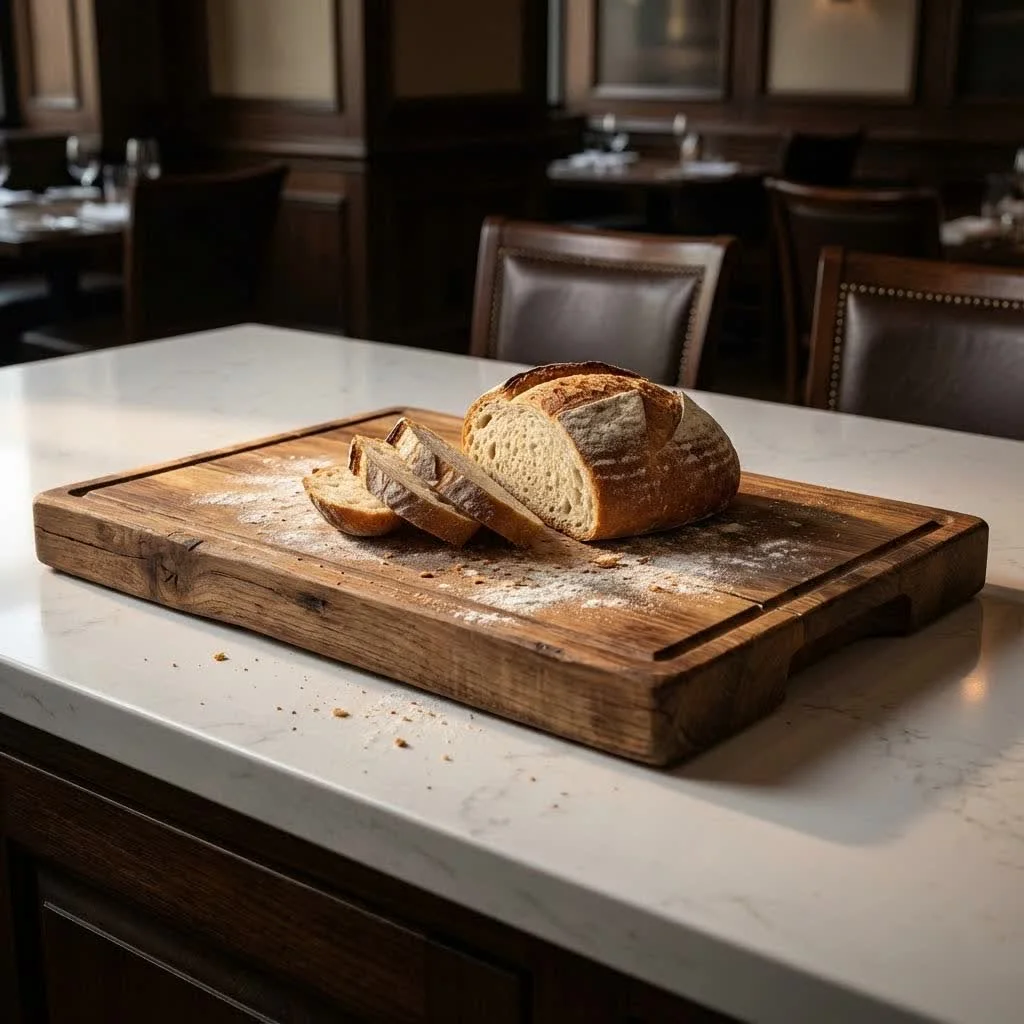
A footed cutting board is a superior choice for kitchen tasks, offering enhanced stability, improved hygiene, and countertop protection compared to traditional flat boards. These boards feature small, non-slip pads or feet on their underside, typically made from rubber or silicone, which elevate the cutting surface slightly above the countertop. This design significantly reduces the risk of knife slips, prevents moisture buildup, and safeguards countertops from scratches and damage.
What Makes a Cutting Board “Footed”?
A footed cutting board is distinguished by the small, often non-slip, pads or feet attached to its underside. These feet, typically made from rubber or silicone, elevate the board slightly above the countertop surface. This seemingly simple design feature is engineered to provide a host of practical advantages over traditional flat cutting boards. For complete kitchenware library on this site.
Why Choose a Footed Cutting Board? Key Benefits
The addition of feet transforms a basic kitchen tool into a more functional and user-friendly piece of equipment.
Unwavering Stability and Safety
One of the most critical advantages of a footed cutting board is its enhanced stability. The non-slip feet grip the countertop, preventing the board from sliding or shifting during vigorous chopping, slicing, or dicing. This unwavering stability significantly reduces the risk of accidental knife slips and potential injuries, allowing you to prep food with greater confidence and efficiency.
Superior Hygiene and Airflow
Elevating the cutting board creates a crucial air gap between the board and the countertop. This improved air circulation prevents moisture buildup underneath the board, which can otherwise create a breeding ground for bacteria and unpleasant odors. By promoting faster and more even drying, footed boards contribute to a more hygienic kitchen environment and help prevent the wood from warping, cracking, or developing mildew.
Protecting Your Precious Countertops
Your kitchen countertops, whether made of delicate wood, gleaming granite, or durable laminate, are a significant investment. A flat cutting board, especially when dragged or used repeatedly in the same spot, can cause scratches, scuffs, or even moisture damage. The feet on a cutting board act as a protective barrier, preventing direct contact between the board’s surface and your countertop, thereby safeguarding it from damage and prolonging its pristine condition.
Effortless Cleanup
The elevated design also simplifies cleanup. Spills, crumbs, or liquid runoff can easily be wiped away from underneath the board without the need to lift and move a heavy, potentially messy, surface. This makes maintaining a clean workspace much more convenient, especially during busy cooking sessions.
Reduced Noise and Vibration
|
Our Picks for the Best Cutting Board in 2026
As an Amazon Associate I earn from qualifying purchases.
|
||
| Num | Product | Action |
|---|---|---|
| 1 | GORILLA GRIP BPA-Free Reversible Kitchen Cutting Board Set of 3, US Designed, Nonporous, Juice Grooves Catch Liquid, Slip Resistant Border, Dishwasher Safe Large Food Chopping Boards, Black Aqua Gray |

|
| 2 | GORILLA GRIP BPA-Free Reversible Kitchen Cutting Board Set of 3, US Designed, Nonporous, Juice Grooves Catch Liquid, Slip Resistant Border, Dishwasher Safe, Durable Large Food Chopping Boards, Aqua |
|
| 3 | Titanium Cutting Board for Kitchen, Cutting Board Double Sided Food Grade, Pure Titanium/PP, Easy to Clean Large Size 16”×11” |
|
| 4 | GORILLA GRIP BPA-Free Reversible Kitchen Cutting Board Set of 3, US Designed, Nonporous, Juice Grooves Catch Liquid, Slip Resistant Border, Dishwasher Safe, Durable Food Chopping Boards, Almond Gray |
|
| 5 | GORILLA GRIP BPA-Free Reversible Kitchen Cutting Board Set of 3, US Designed, Nonporous, Juice Grooves Catch Liquid, Slip Resistant Border, Dishwasher Safe, Durable Food Chopping Boards, Black Gray |
|
| 6 | Keechee Bamboo Cutting Board, Durable Wood Cutting Boards for Kitchen with Deep Juice Grooves & Built-in Handles, Ideal Charcuterie & Chopping for Meat, Vegetables and Fruits Ideal Kitchen Gifts |
|
| 7 | GORILLA GRIP BPA-Free Reversible Kitchen Cutting Board Set of 3, US Designed, Nonporous, Juice Grooves Catch Liquid, Slip Resistant Border, Dishwasher Safe, Durable Food Chopping Boards, Aqua Gray |
|
| 8 | Kikcoin Extra Large Bamboo Cutting Boards, (Set of 3) Chopping Boards with Juice Groove Bamboo Wood Cutting Board Set Butcher Block for Kitchen, End Grain Serving Tray |
|
| 9 | GORILLA GRIP BPA-Free Reversible Kitchen Cutting Board Set of 3, US Designed, Nonporous, Juice Grooves Catch Liquid, Slip Resistant Border, Dishwasher Safe, Durable Large Food Chopping Boards, Black |
|
| 10 | Bamboo Cutting Boards for Kitchen [Set of 3] Wood Cutting Board for Chopping Meat, Vegetables, Fruits, Cheese, Knife Friendly Serving Tray with Handles |
|
Beyond the practical benefits, footed cutting boards can also contribute to a quieter kitchen. The rubber or silicone feet help to absorb shock and dampen vibrations, reducing the clattering noise that can occur when chopping on a flat board against a hard countertop.
Materials Matter: Finding Your Perfect Footed Board
Footed cutting boards are available in various materials, each with its own characteristics:
- Wood: Hardwoods like maple, walnut, cherry, and acacia are popular choices for cutting boards. End-grain wood boards are particularly prized for being gentle on knives, naturally antimicrobial, and self-healing. Wood boards offer a classic aesthetic and durability but require regular maintenance.
- Plastic: Lightweight and often dishwasher-safe, plastic boards are a hygienic option for raw meats as they are non-porous. However, harder plastics can dull knives faster and tend to show knife marks where bacteria can eventually hide.
- Bamboo: An eco-friendly alternative, bamboo boards are dense and resistant to cuts. While durable, they can be tougher on knife blades than some hardwoods.
- Wood Fiber Composites: Made from compressed wood fibers and resin, these boards are durable and often dishwasher-safe, but their hardness can be more abrasive on knives.
It is generally recommended to avoid cutting boards made of glass or ceramic, as their extremely hard surfaces will rapidly dull and damage knife blades.
Choosing the Right Footed Cutting Board for Your Kitchen
When selecting a footed cutting board, consider these factors:
- Size and Thickness: Choose a size appropriate for your typical cooking tasks and available storage space. Larger, thicker boards (1.25 to 2 inches or more) offer greater stability and are ideal for heavy-duty prep, while smaller boards are convenient for quick tasks.
- Juice Grooves: Some boards feature a perimeter juice groove to catch liquids, especially useful for carving meats or slicing juicy fruits. Consider if this feature is essential for your cooking style, as it reduces the available cutting surface.
- Reversibility: Most footed boards are not designed to be reversible due to the feet. If two cutting surfaces are a priority, you might opt for a flat board and use a damp towel underneath for stability, though this forfeits the other benefits of integrated feet.
Care and Maintenance for Longevity
Proper care is essential, especially for wood and bamboo footed cutting boards, to ensure their longevity and hygiene:
- Daily Cleaning: Hand-wash your board immediately after each use with warm water and mild dish soap. Ensure you wash all sides to prevent uneven moisture absorption and potential warping. Rinse thoroughly to remove all soap residue.
- Drying: After washing, dry the board thoroughly with a clean towel. Then, allow it to air dry completely, ideally standing on its edge, to promote even airflow around all surfaces. The feet assist in this drying process by elevating the board.
- Oiling and Conditioning: For wood and bamboo boards, regular oiling with food-grade mineral oil or a specialized board cream is crucial. This prevents the wood from drying out, cracking, and helps maintain its water resistance. Apply generously every 2-4 weeks, or monthly, depending on frequency of use, allowing it to soak in overnight.
- What to Avoid: Never put wood or bamboo cutting boards in a dishwasher, as high heat and prolonged water exposure will cause severe warping and cracking. Avoid soaking boards in water. Harsh chemicals or bleach can damage wood; for disinfection, a vinegar and water solution is preferable. Also, try to avoid using serrated knives or cleavers on wooden boards, as they can scar the surface.
By understanding the unique advantages and proper care requirements of footed cutting boards, you can make an informed choice that elevates your kitchen experience, providing a safer, cleaner, and more efficient surface for all your culinary endeavors.
Frequently Asked Questions
What is the main advantage of a footed cutting board?
The main advantage of a footed cutting board is its enhanced stability, which significantly reduces the risk of accidental knife slips and potential injuries. The non-slip feet grip the countertop, preventing the board from shifting during vigorous chopping, slicing, or dicing.
How do footed cutting boards improve kitchen hygiene?
Footed cutting boards improve kitchen hygiene by creating an air gap between the board and the countertop, which prevents moisture buildup. This improved air circulation promotes faster and more even drying, inhibiting bacterial growth and preventing mildew.
Can footed cutting boards protect my kitchen countertops?
Yes, footed cutting boards protect kitchen countertops by preventing direct contact between the board's surface and the counter. This protective barrier safeguards countertops from scratches, scuffs, and moisture damage that can occur with flat boards, prolonging their pristine condition.
What materials are commonly used for footed cutting boards?
Footed cutting boards are commonly made from various materials, including hardwoods like maple, walnut, cherry, and acacia, as well as plastic, bamboo, and wood fiber composites. Each material offers distinct characteristics regarding durability, knife friendliness, and maintenance requirements.
How should I clean and maintain a wooden footed cutting board?
To clean a wooden footed cutting board, hand-wash it immediately after each use with warm water and mild dish soap, then dry thoroughly. For maintenance, regularly oil the board every 2-4 weeks with food-grade mineral oil to prevent drying, cracking, and maintain water resistance.
Caring for Your Footed Cutting Board
Proper care and maintenance are essential for extending the life and ensuring the hygiene of your footed cutting board, especially for wood and bamboo types.
Hand-wash your board immediately after each use with warm water and mild dish soap. Ensure all sides are washed to prevent uneven moisture absorption and potential warping. Rinse thoroughly to remove all soap residue.
After washing, dry the board thoroughly with a clean towel. Then, allow it to air dry completely, ideally standing on its edge, to promote even airflow around all surfaces. The integrated feet assist in this drying process by elevating the board.
For wood and bamboo boards, regular oiling with food-grade mineral oil or a specialized board cream is crucial. This prevents the wood from drying out, cracking, and helps maintain its water resistance. Apply generously every 2-4 weeks, or monthly, depending on frequency of use, allowing it to soak in overnight.
Never put wood or bamboo cutting boards in a dishwasher, as high heat and prolonged water exposure will cause severe warping and cracking. Avoid soaking boards in water. Harsh chemicals or bleach can damage wood; for disinfection, a vinegar and water solution is preferable.
Cooking gear we tested in our own kitchens
Free PDF — preheat times measured on 10 popular air fryers.
I was skeptical about how much difference a footed board would make, but I’m really impressed. The elevation from the silicone feet is great for air circulation, and I’ve noticed less moisture buildup underneath, which is a big plus for hygiene. My only minor complaint is that it’s a bit heavier than my old board, but the stability is worth it.
I finally upgraded to a footed cutting board after years of dealing with my old flat one sliding all over the place. The non-slip pads on this new one are a game-changer! It stays put no matter how much chopping I’m doing, which makes me feel a lot safer. Plus, I love that it keeps my counters protected from scratches.
I bought a footed cutting board hoping it would solve my issue with boards warping, but I’m not entirely convinced yet. While the stability is definitely better with the rubber feet, I still find myself having to dry it thoroughly after washing to prevent any potential issues. It’s good, but not a total miracle worker for my specific problem.
As someone who spends a lot of time in the kitchen, the enhanced stability of a footed cutting board is invaluable. I used to constantly worry about knife slips, especially when working with tougher vegetables. The elevated design really does make a difference in reducing that risk, and my countertops are definitely thanking me for the extra protection.